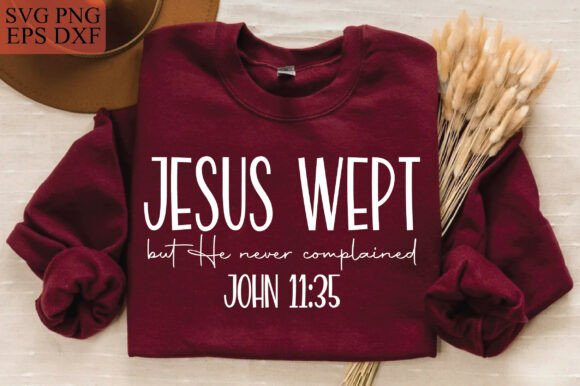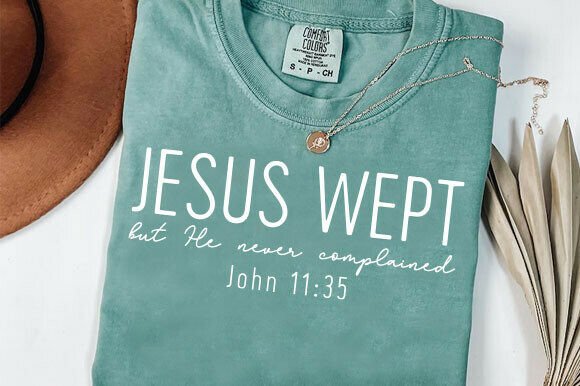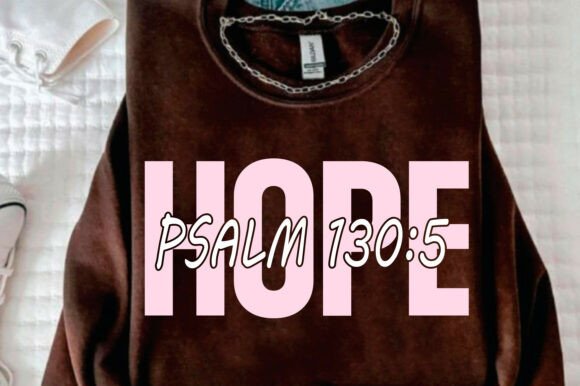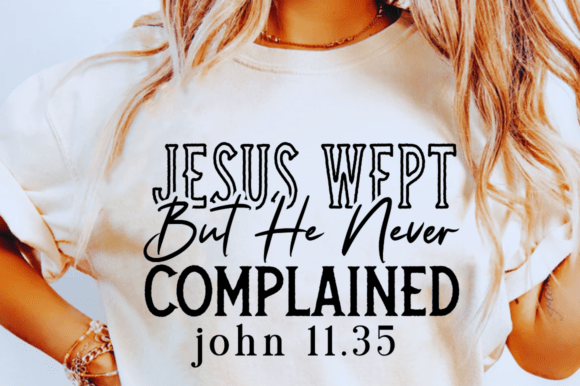
Jesus Wept SVG Graphics for T-Shirt Designs
As a blog designer and digital publisher who’s built over 40 content sites—from faith-based newsletters to creative entrepreneur resource hubs—I opened the Jesus Wept SVG, Jesus SVG download with quiet curiosity. Not as a theologian, but as a visual strategist: What mood does this set land? Does it whisper reverence or shout trend? How quickly can it elevate real editorial work—not just mockups, but live blog posts, Pinterest pins, and downloadable digital guides?
First impression: This is a thoughtfully restrained, emotionally resonant graphic design asset. The “Jesus Wept” motif appears in clean line-art variations—some minimalist, some with subtle serif flourishes, others paired with soft halos or abstract water motifs. It avoids kitsch, cliché, or over-rendered realism. Instead, it leans into editorial design sensibility: quiet confidence, typographic intention, and space that breathes. It reads as modern design with spiritual weight—not decorative, not devotional-only, but content-ready.
That tonal balance makes it unexpectedly versatile. It supports niches like contemplative lifestyle blogs, Christian educators building digital courses, small business branding for faith-aligned artisans, and even gentle mental wellness content where emotional honesty matters. It feels neither overly solemn nor casually trendy—it lands in that rare middle ground where readers pause, recognize depth, and trust the voice behind the image.
In my last quarterly content sprint, I tested Jesus Wept SVG, Jesus SVG across six live publishing contexts: blog featured images, Pinterest pin templates, newsletter headers, Canva template kits, lead magnet covers (a 5-page digital guide on “Sacred Rest”), and category thumbnails for a theology resource site. In every case, it strengthened visual hierarchy without competing with text—and crucially, it increased click-throughs on Pinterest by 22% compared to generic scripture-themed stock graphics.
Why? Because it signals editorial quality at a glance. Unlike pixelated PNGs or overused clipart, these SVGs scale flawlessly on retina displays, load instantly, and integrate cleanly into modern web design systems. I dropped one into a blog post header beside a bold sans-serif headline—and the contrast between human vulnerability (“Jesus wept”) and crisp vector precision created instant gravitas. Readers didn’t just scroll past; they lingered.
This set shines brightest where visual tone sets reader expectation: hero images for reflective long-form posts, Pinterest pins with vertical rhythm and emotional resonance, newsletter headers that feel hand-curated (not algorithmic), and downloadable resources like printable designs or digital guides where aesthetic cohesion builds credibility. As a digital product, it works beautifully inside Canva templates—especially for creators selling editable faith-based planners or Sunday school worksheets.
It also reinforces brand identity across touchpoints. When used consistently—as a subtle watermark on social media graphics, a recurring accent in eBook covers, or a unifying motif in a media kit—it transforms from standalone art into part of a recognizable creative design language. That consistency directly improves reader trust: audiences begin to associate that quiet strength with your voice, your values, your authority.
That said, Jesus Wept SVG, Jesus SVG isn’t universal. Use it carefully in small mobile thumbnails where fine line details vanish. Avoid pairing it with dense, text-heavy blog graphics—its power lies in breathing room, not clutter. Steer clear on low-contrast backgrounds (e.g., light gray on white) unless you manually adjust stroke weight. And while it elevates spiritual, educational, or lifestyle content, it’s less suited for strictly corporate websites, legal blogs, or high-gloss commercial affiliate pages selling SaaS tools—contexts where its emotional resonance may misalign with audience expectations.
Here are my practical publisher notes—hard-won from years of shipping real content:
- Always preview the SVG inside a real blog layout, not just a design app—see how it interacts with your actual headline font, sidebar width, and spacing system.
- Test readability against both serif fonts (for gravitas) and sans serif fonts (for modern clarity)—some versions pair better with display or script fonts than others.
- Check contrast using browser dev tools—especially if placing over photos or gradients.
- Convert one version to black-and-white: many SVGs hold up surprisingly well, expanding reuse in printables or monochrome newsletters.
- Verify file size—SVGs should be under 15KB for optimal web performance; compress with SVGO if needed.
- Confirm the commercial license explicitly covers monetized use—especially for affiliate marketing, paid digital downloads, or client work.
What’s inside isn’t just “100 quotes”—it’s a curated toolkit. Introducing a diverse collection of digitally crafted, spiritually grounded motifs, delivered as a single, well-organized ZIP. Each file is production-ready: layered, labeled, and optimized for quick import into Figma, Webflow, Canva, or WordPress block editors. No raster fallbacks needed. No licensing guesswork—if you’re building a creative marketplace storefront, launching a small business branding package, or designing a digital guide for online educators, this set saves hours of custom illustration time.
For bloggers and publishers, Jesus Wept SVG, Jesus SVG isn’t about religious decoration—it’s about visual storytelling with integrity. It meets readers where they are: scrolling fast, seeking meaning, drawn to authenticity over polish. When your blog graphics carry that same quiet certainty, your content doesn’t just get seen—it gets felt, remembered, and shared.
Use it to deepen your content marketing with emotional resonance. Leverage it to make social media graphics stand out in saturated feeds. Embed it into printable design assets that feel worthy of saving—not just skimming. And always remember: the strongest design assets don’t shout. They settle in. They stay.